


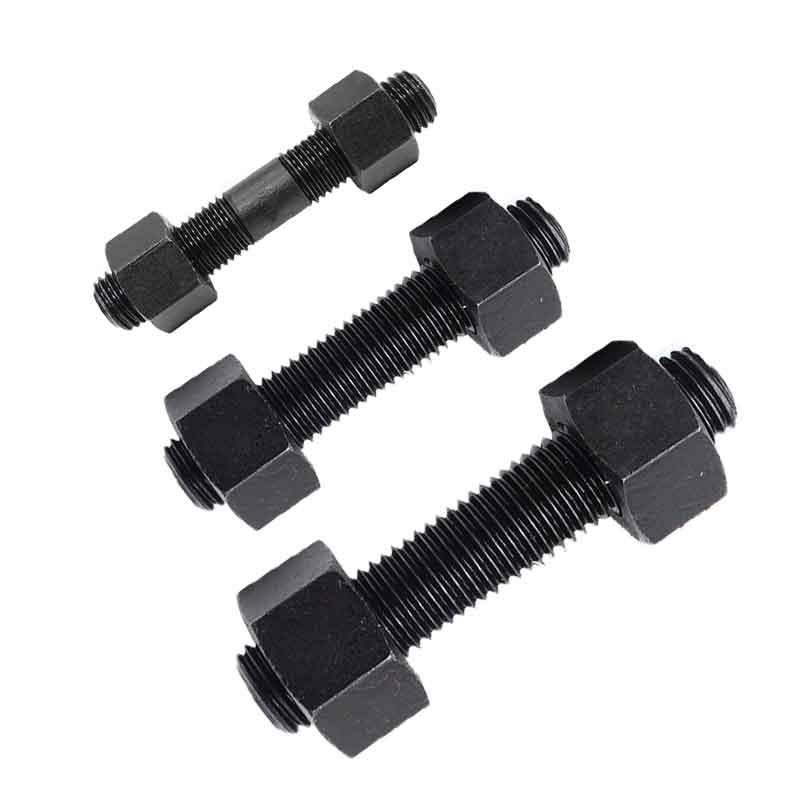
Carriage bolt DIN603
Core structure:
Base material: usually carbon steel (such as 45 # steel, 40Cr) or stainless steel, with a zinc layer covering the surface after galvanizing.
Thread Type: commonly trapezoidal thread (Tr type) or ball screw, the latter is mostly used in high-precision scenarios.
Galvanizing process: divided into electroplated zinc (thin and uniform coating) and hot-dip zinc (thick coating, strong corrosion resistance).
- Characteristics of galvanizing process
Corrosion prevention mechanism:
Sacrificial anode protection: The zinc layer preferentially oxidizes, delaying the corrosion of the substrate steel.
Physical barrier: A dense zinc layer isolates water vapor, oxygen, and substrate from contact.
Process comparison:
Process type Coating thickness Corrosion resistance Applicable scenarios Cost
Galvanized 5-20 μ m for general indoor equipment, with low corrosion environment
Hot dip galvanizing 50-150 μ m, excellent in outdoor, chemical, and marine environments
- Core advantages
Corrosion resistance: Suitable for humid, salt spray, acidic and alkaline environments (such as ships and chemical equipment).
Economy: The cost of galvanizing is lower than that of stainless steel lead Screws, and the lifespan is significantly extended.
Low maintenance: The self-healing properties of the zinc layer reduce the need for frequent maintenance.
Adaptability: Can be matched with various transmission systems, such as stepper motors and servo motors.
- Application scenarios
Outdoor machinery: construction machinery, agricultural equipment (exposed to rainwater and soil environments).
Ship and ocean engineering: deck lifting mechanism, valve control (resistant to salt spray corrosion).
Chemical equipment: reaction kettle transmission system, pipeline regulating device (acid and alkali resistant medium).
Construction industry: automatic doors and windows, lifting platforms (low-cost rust prevention requirements).