


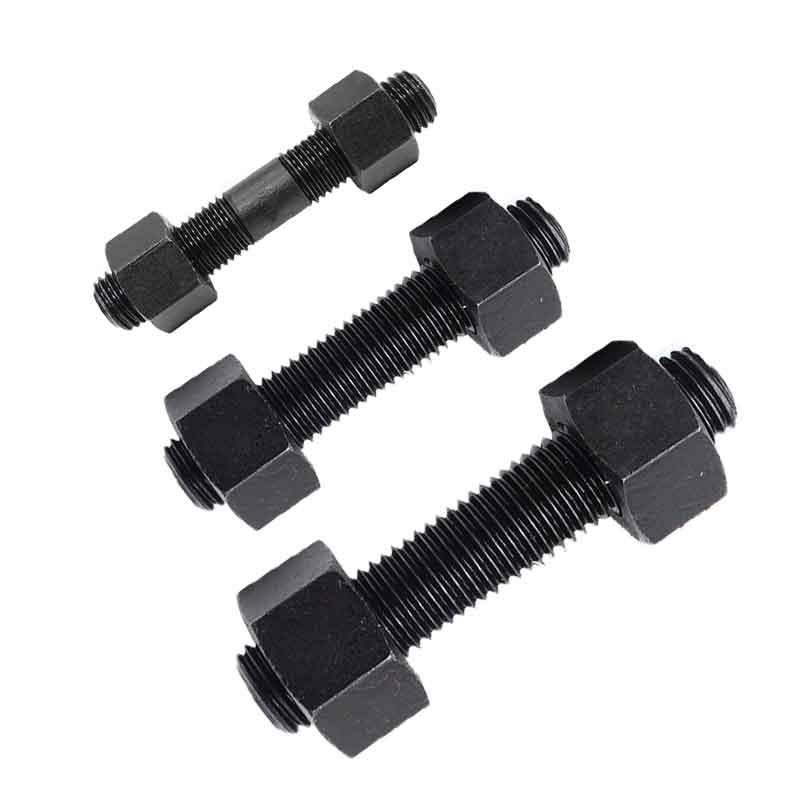
Zn Hotplating
Bridges and Steel Structures:
Used for connecting parts such as bridge main beams, trusses, guardrails, etc., to resist corrosion from rainwater and snow melting agents (chloride salts).
For example, the bolts of a cross sea bridge need to withstand high humidity and salt spray erosion, and the hot-dip galvanized layer can provide protection for more than 20 years.
Highways and railways:
Fixed guardrails, sound insulation panels, and track fasteners to address acid rain, automobile exhaust (sulfur dioxide), and industrial pollution.
Transmission towers and communication towers:
Used for connecting iron tower bases and crossarms, it can withstand ultraviolet radiation, thunderstorms, and acid mist environments in high-altitude areas.
2. Marine and Port Engineering
Dock facilities:
Fixed fenders, mooring columns, steel piles, and long-term immersion in seawater to resist chloride ion corrosion.
Regular maintenance (such as repainting with anti rust paint) is required to extend the lifespan.
Ships and offshore platforms:
The fastening of deck equipment and pipeline supports must pass the ISO 9227 salt spray test (no red rust for over 1000 hours).
Note: Deep sea environments may require upgrading to dual protection of hot-dip galvanizing and epoxy coating.
3. Industrial and energy sectors
Chemical equipment:
Fixed reaction tank bracket, pipeline flange, resistant to acidic and alkaline gases (such as hydrogen sulfide), high temperature and high humidity environment.
Applicable scenarios: Outdoor equipment in chemical plants and refineries.
Wind power and photovoltaics:
The wind turbine tower bolts need to withstand wind load vibration, coastal salt spray, and temperature differences (-30 ° C to 50 ° C).
The photovoltaic brackeT Bolts need to be resistant to UV aging and avoid coating powdering (hot-dip galvanizing is better than electroplating galvanizing).
Agricultural facilities:
Greenhouse steel frame and irrigation equipment connectors to prevent corrosion caused by long-term humid environments.
4. Municipal and public facilities
Street lights and signal lights:
The lamp post base and cantilever are fixed to resist the erosion of urban acid rain and snow melting agents.
Sewage treatment plant:
The steel structure connecting the aeration tank and sedimentation tank is resistant to hydrogen sulfide gas and sewage splashing.
5. Special Scenarios and Precautions
High salt alkali areas:
For example, in the northwest saline alkali land and the coastal areas of the Middle East desert, hot-dip galvanizeD Bolts need to be coated with a thicker layer (≥ 80 μ m).
Vibration environment:
The bolts of railway tracks and mining machinery need to be matched with anti loosening nuts (such as nylon locking nuts) to avoid loosening due to vibration.
High temperature environment:
Long term scenarios above 200 ° C, such as around boilers, may accelerate the oxidation of zinc layers and require the use of stainless steel or zinc impregnated bolts.
Selection suggestions
Harsh environment: Prioritize hot-dip galvanized bolts and use sealing agents (such as phosphating treatment) or composite coatings.
Cost sensitive scenarios: Short term projects or low corrosion environments (such as indoor dry environments) can choose galvanizing, but regular inspections are required.
High strength requirement: Bolts of grade 10.9 and above must undergo dehydrogenation treatment to avoid the risk of hydrogen embrittlement and fracture.
summarize
Hot dip galvanized bolts are a "defense level" choice for heavily corrosive environments, especially suitable for outdoor, marine, chemical and other scenarios. Its core value lies in exchanging high initial costs for extremely low post maintenance costs, making it suitable for projects with high requirements for safety and durability.