

Company News


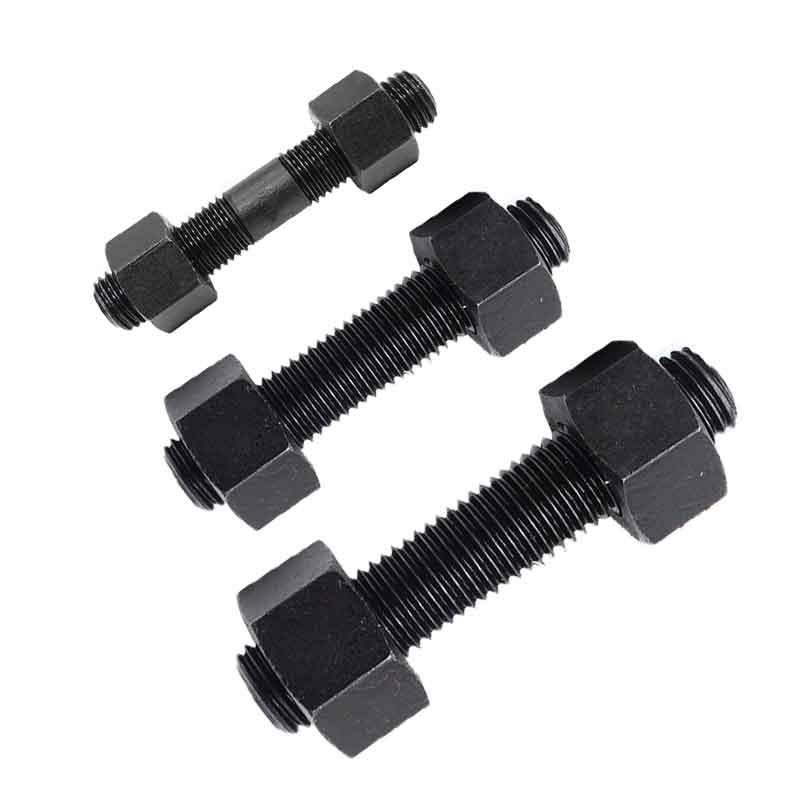
Chinese manufacturers enable enterprises to use information technology for development, understand industry information, and provide you with convenient and fast services: internal hexagonal cylindric
2024-09-10
There is a classification of hexagonal bolts based on the hardness, tensile strength, yield strength, etc. of the screw wire, which is the level of hexagonal bolts. On different product materials, different grades of internal hexagonal bolts are required to correspond to them. Internal hexagonal bolts all have the following grades: internal hexagonal bolts are divided into ordinary and high-strength according to their strength levels. Ordinary hexagonal bolts refer to 4.8 grade, while high-strength hexagonal bolts refer to 8.8 grade or above, including 10.9 grade and 12.9 grade. Grade 12.9 hexagon sockeT Bolts generally refer to black hexagon socket head screws with rolled patterns, natural color an
performance requirement
1. The nominal tensile strength of the bolt material reaches 400MPa level;
2. The yield strength ratio of bolt material is 0.6; The nominal yield strength of the bolt material is 400 × 0.6=240MPa.
High strength bolts with a performance level of 10.9, made of materials that have undergone heat treatment, can achieve:
1. The nominal tensile strength of the bolt material reaches 1000MPa level;
2. The yield strength ratio of bolt material is 0.9; The nominal yield strength of the bolt material reaches the level of 1000 × 0.9=900MPa.
The meaning of the performance grade of internal hexagonal bolts is an internationally recognized standard. Bolts with the same performance grade, regardless of their material and origin differences, have the same performance, and only the performance grade should be selected for design.
The classification of hexagonal bolts is basically like this, and the price in the market will definitely vary depending on the grade. Generally, high-strength hexagonal bolts are definitely much more expensive than ordinary hexagonal bolts. The four most commonly used grades in the market are 4.8, 8.8, 10.9, and 12.9.
The head of the hexagonal bolt is off center and crooked, which may cause serious problems. For example, from the appearance of the product, it is not aesthetically pleasing overall. Another issue is that it is biased, which can easily cause the production tool needle to break. The most serious problem can also lead to a series of issues such as the breakage of hexagonal bolts.
1. The nominal tensile strength of the bolt material reaches 400MPa level;
2. The yield strength ratio of bolt material is 0.6; The nominal yield strength of the bolt material is 400 × 0.6=240MPa.
High strength bolts with a performance level of 10.9, made of materials that have undergone heat treatment, can achieve:
1. The nominal tensile strength of the bolt material reaches 1000MPa level;
2. The yield strength ratio of bolt material is 0.9; The nominal yield strength of the bolt material reaches the level of 1000 × 0.9=900MPa.
The meaning of the performance grade of internal hexagonal bolts is an internationally recognized standard. Bolts with the same performance grade, regardless of their material and origin differences, have the same performance, and only the performance grade should be selected for design.
The classification of hexagonal bolts is basically like this, and the price in the market will definitely vary depending on the grade. Generally, high-strength hexagonal bolts are definitely much more expensive than ordinary hexagonal bolts. The four most commonly used grades in the market are 4.8, 8.8, 10.9, and 12.9.
The head of the hexagonal bolt is off center and crooked, which may cause serious problems. For example, from the appearance of the product, it is not aesthetically pleasing overall. Another issue is that it is biased, which can easily cause the production tool needle to break. The most serious problem can also lead to a series of issues such as the breakage of hexagonal bolts.