
Hot Products


0102030405
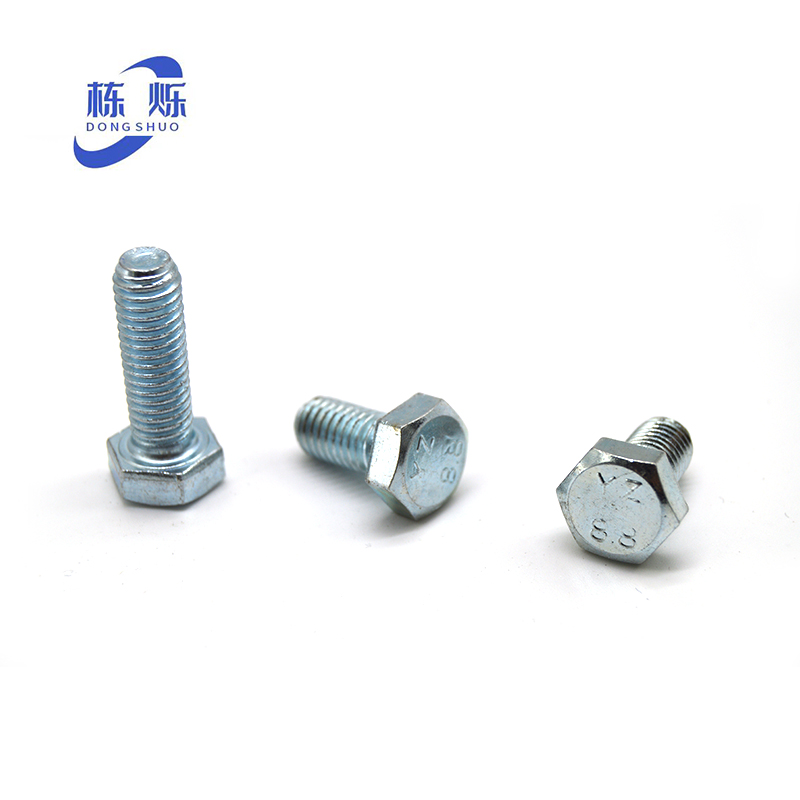
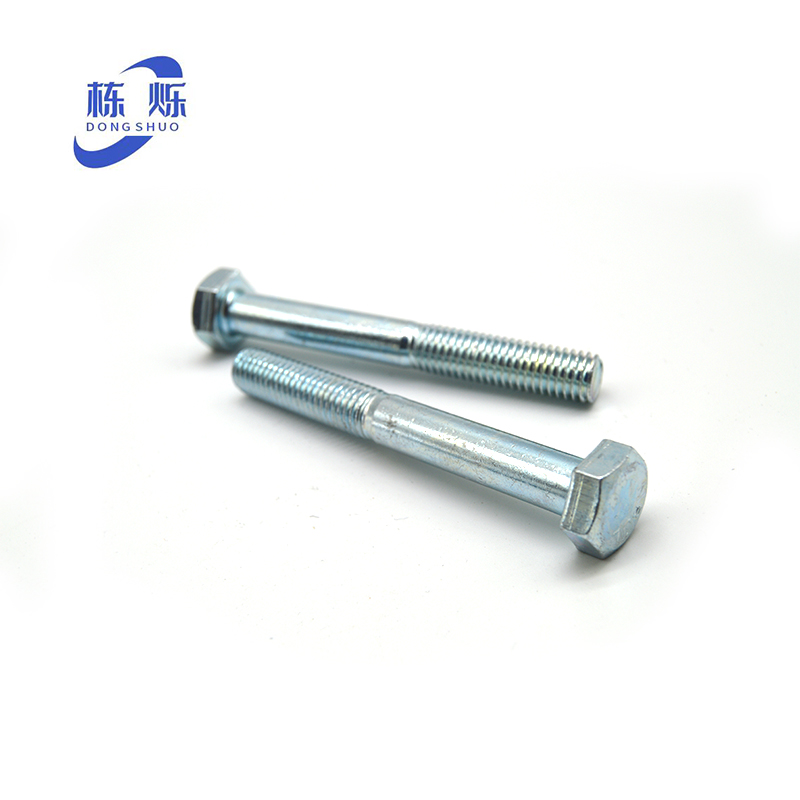
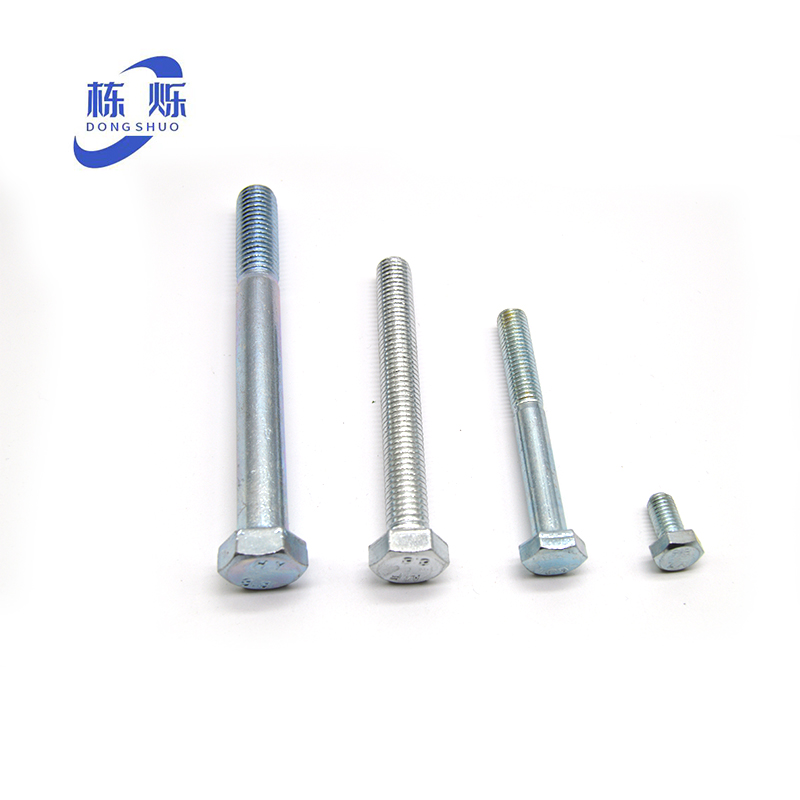
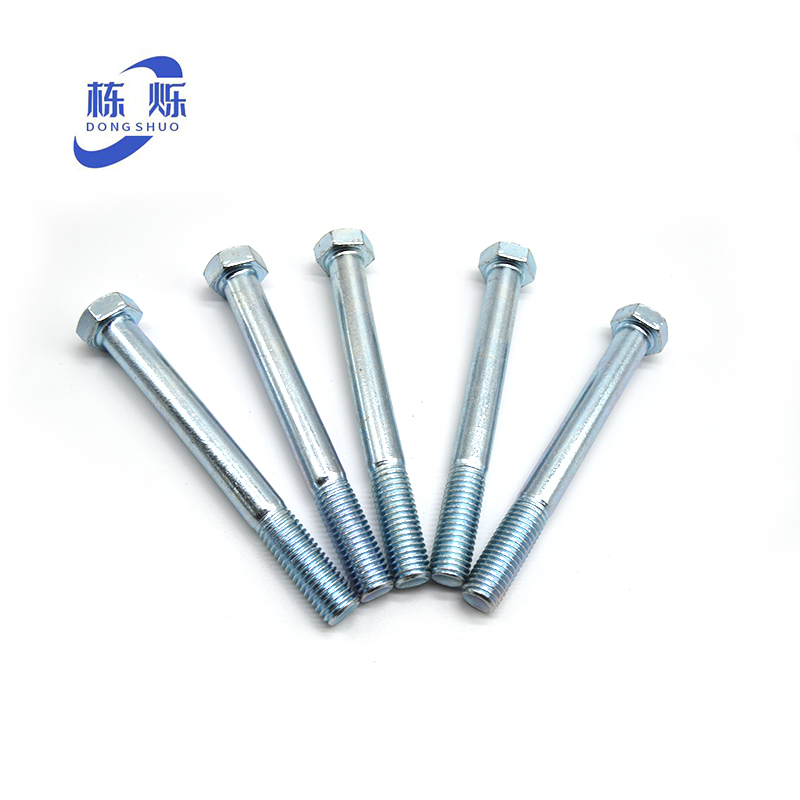
China Suppliers Factory M8-M16 External Hexagonal Bolt 8.8s - Strength & Limitations Explained
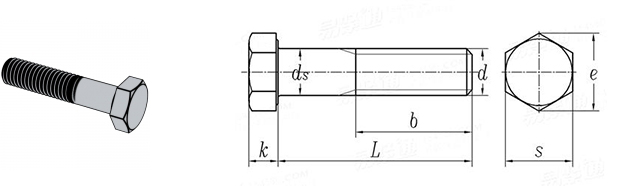
📋 Thread Specifications — M10 to M24
| Thread specifications d |
M10 | M12 | M14 | M16 | M18 | M20 | M22 | M24 | |
| P | Pitch | 1.50 | 1.75 | 2.0 | 2.0 | 2.5 | 2.5 | 2.5 | 3 |
| b | L≤125 | 26 | 30 | 34 | 38 | 42 | 46 | 50 | 54 |
| 125<L≤200 | 32 | 36 | 40 | 44 | 48 | 52 | 56 | 60 | |
| L>200 | / | / | / | 57 | 61 | 65 | 69 | 73 | |
| ds | Max | 10 | 12 | 14 | 16 | 18 | 20 | 22 | 24 |
| Min | 9.64 | 11.57 | 13.57 | 15.57 | 17.57 | 19.48 | 21.48 | 23.48 | |
| e | Min | 19.68 | 22.58 | 25.94 | 29.3 | 32.66 | 36.96 | 39.2 | 44.8 |
| k | Max | 6.69 | 7.79 | 9.09 | 10.29 | 11.85 | 12.85 | 14.35 | 15.35 |
| Min | 6.11 | 7.21 | 8.51 | 9.71 | 11.15 | 12.15 | 13.65 | 14.65 | |
| s | Max | 18 | 21 | 24 | 27 | 30 | 34 | 36 | 41 |
| Min | 17.57 | 20.16 | 23.16 | 26.16 | 29.16 | 33 | 35 | 40 | |
| 1,000 pieces of steel weigh ≈ kg | - | - | - | - | - | - | - | - | |
📋 Thread Specifications — M27 to M48
| Thread specifications d |
M27 | M30 | M33 | M36 | M39 | M42 | M45 | M48 | |
| P | Pitch | 3 | 3 | 3 | 3 | 3 | 3 | 3 | 3 |
| b | L≤125 | 60 | 66 | 72 | 78 | 84 | 90 | 96 | 102 |
| 125<L≤200 | 66 | 72 | 78 | 84 | 90 | 96 | 102 | 108 | |
| L>200 | 79 | 85 | 91 | 97 | 103 | 109 | 115 | 121 | |
| ds | Max | 27 | 30 | 33 | 36 | 39 | 42 | 45 | 48 |
| Min | 26.48 | 29.48 | 32.38 | 35.38 | 38.38 | 41.38 | 44.38 | 47.38 | |
| e | Min | 50.4 | 54.9 | 60.3 | 65.9 | 71.5 | 71.5 | 76.3 | 81.9 |
| Min | Min | 17.35 | 19.12 | 21.42 | 22.92 | 25.42 | 26.42 | 28.42 | 30.42 |
| Min | Min | 16.65 | 18.28 | 20.58 | 22.08 | 24.58 | 25.58 | 27.58 | 29.58 |
| s | Max | 46 | 50 | 55 | 60 | 65 | 65 | 70 | 75 |
| Min | 45 | 49 | 53.8 | 58.8 | 63.8 | 63.8 | 68.1 | 73.1 | |
| 1,000 pieces of steel weigh ≈ kg | - | - | - | - | - | - | - | - | |
External hexagonal bolts are a common type of mechanical fastener, mainly used for connecting and fixing mechanical equipment.
⚙ External Hexagonal Bolts Are Commonly Used For:
- 🔗 Connecting Components: The outer hexagonal bolt fixes multiple components together through the action of torque, forming a whole.
- 💪 Load Bearing: Due to its high-strength design, the outer hexagonal bolt can withstand large loads and shear forces, and is not easy to break or loosen, ensuring the firmness of the connection.
- 🔧 Easy Installation: No special fixtures or tools are required during installation; it can be completed with a wrench or spanner, and the installation speed is fast, which can improve production efficiency.
- 🌏 Wide Application Range: External hexagonal bolts are suitable for various connection situations, such as heavy machinery, construction, and bridge engineering, and can meet various connection requirements.
❓ Frequently Asked Questions (FAQ)
🔹
What is an external hexagonal bolt and how does it differ from other bolt types?
An external hexagonal bolt (hex bolt) features a six-sided head that allows tightening with a standard wrench or socket tool. Unlike socket head cap screws or carriage bolts, hex bolts are designed for high-torque applications and are easily accessible with common tools, making them one of the most widely used fastener types in industrial and construction settings.
🔹
What thread sizes are available for external hexagonal bolts?
External hexagonal bolts are available in a wide range of metric thread sizes, typically from M10 up to M48 and beyond. Common sizes include M10, M12, M14, M16, M18, M20, M22, M24, M27, M30, M33, M36, M39, M42, M45, and M48, each with specific pitch, grip length (b), and wrench size (s) values as listed in the specification tables above.
🔹
What materials are external hexagonal bolts typically made from?
External hexagonal bolts are most commonly manufactured from carbon steel, alloy steel, and stainless steel. Carbon steel bolts are often treated with zinc plating or hot-dip galvanizing for corrosion resistance. Stainless steel grades (such as A2 and A4) are preferred for environments with high moisture or chemical exposure, while alloy steel bolts are used for heavy-load structural applications.
🔹
What industries commonly use external hexagonal bolts?
External hexagonal bolts are used across a broad spectrum of industries including construction, bridge engineering, heavy machinery manufacturing, automotive assembly, shipbuilding, and infrastructure projects. Their high load-bearing capacity and ease of installation make them the preferred fastener choice wherever strong, reliable connections are required.
🔹
How do I select the correct bolt length for my application?
Bolt length selection depends on the total thickness of the materials being joined plus the required thread engagement. As a general guideline, the threaded portion (b) varies with total bolt length: for L≤125mm, L between 125–200mm, and L>200mm, different thread lengths apply as shown in the specification tables. It is recommended to ensure at least 1.5× the bolt diameter in thread engagement for a secure connection.
🔹
What standards govern external hexagonal bolt dimensions?
External hexagonal bolts are manufactured according to internationally recognized standards such as ISO 4014 (hex bolts with partial thread), ISO 4017 (hex bolts with full thread), DIN 931, DIN 933, and ASME B18.2.3. These standards define precise dimensions for thread pitch, head height (k), wrench size (s), and circumscribed circle diameter (e) to ensure interchangeability and compatibility across global applications.