

Hot Products


0102030405
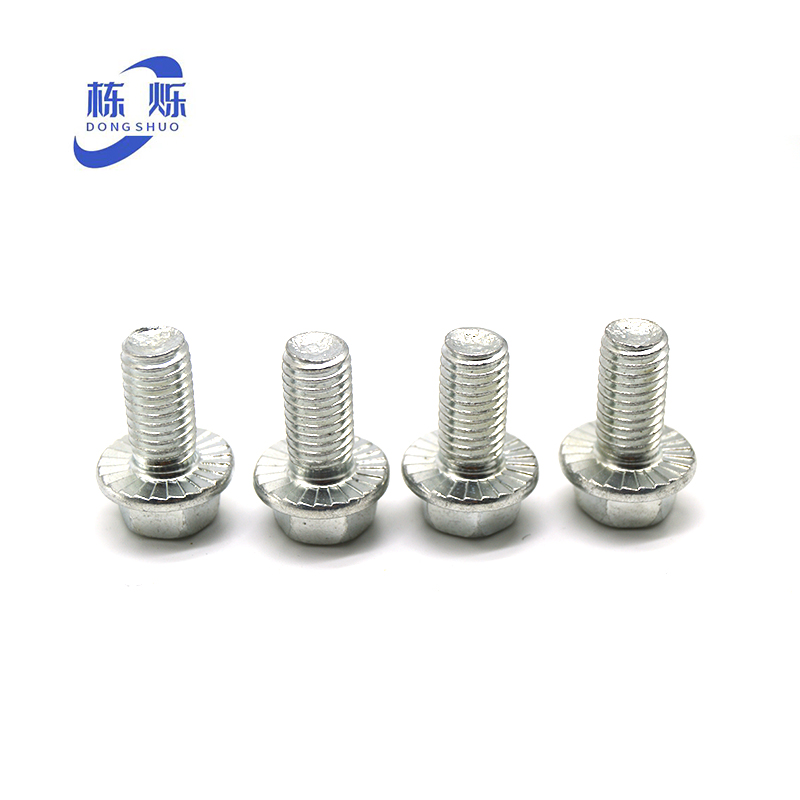


China Suppliers Factory Galvanized DIN 6921 Hexagonal Flange Hex Bolts for Industrial Applications
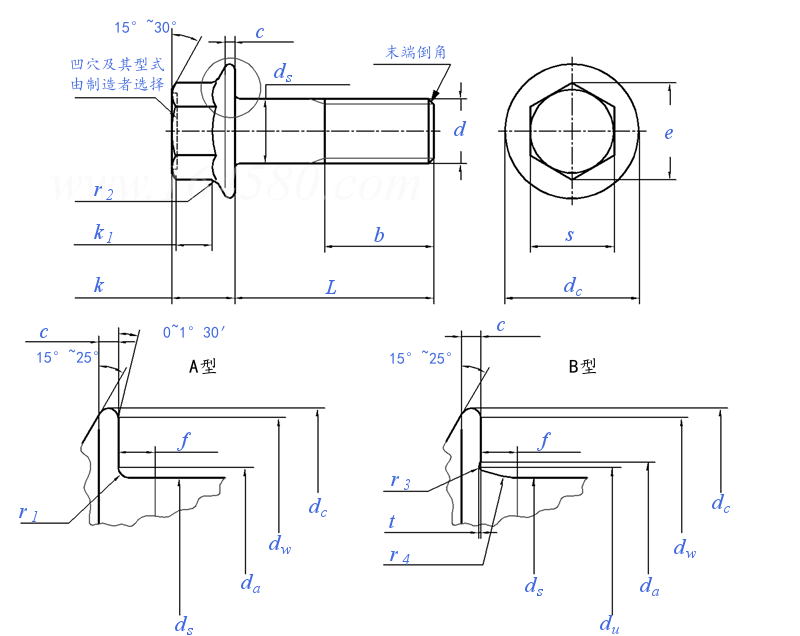
| Thread specifications d | M5 | M6 | M8 | M10 | M12 | M14 | M16 | M20 | ||
| P | Pitch | Coarse teeth | 0.8 | 1 | 1.25 | 1.5 | 1.75 | 2 | 2 | 2.5 |
| Fine Teeth 1 | / | / | 1 | 1.25 | 1.5 | 1.5 | 1.5 | 1.5 | ||
| Fine Teeth 2 | / | / | / | 1 | 1.25 | / | / | / | ||
| b | L≤125 | 16 | 18 | 22 | 26 | 30 | 34 | 38 | 46 | |
| 125<L≤200 | / | / | 28 | 32 | 36 | 40 | 44 | 52 | ||
| L>200 | / | / | / | / | / | / | 57 | 65 | ||
| c | Min | 1 | 1.1 | 1.2 | 1.5 | 1.8 | 2.1 | 2.4 | 3 | |
| da | Type A | Max | 5.7 | 6.8 | 9.2 | 11.2 | 13.7 | 15.7 | 17.7 | 22.4 |
| Type B | Max | 6.2 | 7.4 | 10 | 12.6 | 15.2 | 17.7 | 20.7 | 25.7 | |
| dc | Max | 11.8 | 14.2 | 18 | 22.3 | 26.6 | 30.5 | 35 | 43 | |
| ds | Max | 5 | 6 | 8 | 10 | 12 | 14 | 16 | 20 | |
| Min | 4.82 | 5.82 | 7.78 | 9.78 | 11.73 | 13.73 | 15.73 | 19.67 | ||
| du | Max | 5.5 | 6.6 | 9 | 11 | 13.5 | 15.5 | 17.5 | 22 | |
| dw | Min | 9.8 | 12.2 | 15.8 | 19.6 | 23.8 | 27.6 | 31.9 | 39.9 | |
| e | Min | 8.71 | 10.95 | 14.26 | 16.5 | 17.62 | 19.86 | 23.15 | 29.87 | |
| f | Max | 1.4 | 2 | 2 | 2 | 3 | 3 | 3 | 4 | |
| k | Max | 5.4 | 6.6 | 8.1 | 9.2 | 11.5 | 12.8 | 14.4 | 17.1 | |
| k1 | Min | 2 | 2.5 | 3.2 | 3.6 | 4.6 | 5.1 | 5.8 | 6.8 | |
| r1 | Min | 0.25 | 0.4 | 0.4 | 0.4 | 0.6 | 0.6 | 0.6 | 0.8 | |
| r2 | Max | 0.3 | 0.4 | 0.5 | 0.6 | 0.7 | 0.9 | 1 | 1.2 | |
| r3 | Min | 0.1 | 0.1 | 0.15 | 0.2 | 0.25 | 0.3 | 0.35 | 0.4 | |
| r4 | ≈ | 3 | 3.4 | 4.3 | 4.3 | 6.4 | 6.4 | 6.4 | 8.5 | |
| s | Max=Public | 8 | 10 | 13 | 15 | 16 | 18 | 21 | 27 | |
| Min | 7.78 | 9.78 | 12.73 | 14.73 | 15.73 | 17.73 | 20.67 | 26.67 | ||
| t | Max | 0.15 | 0.2 | 0.25 | 0.3 | 0.35 | 0.45 | 0.5 | 0.65 | |
| Min | 0.05 | 0.05 | 0.1 | 0.15 | 0.15 | 0.2 | 0.25 | 0.3 | ||
| Thread length b | - | - | - | - | - | - | - | - | ||
|
1. e Min. = 1.12 x S Min. 2. Material: a) Steel, strength class (material): 8.8, 10.9, 12.9 — DIN ISO 898-1 b) Stainless steel, strength class (material): A2-70 — DIN 267-11 |
||||||||||
🔩 Key Functions of Flange Hexagonal Bolts
A flange hexagonal bolt is a fastener used to connect components, and its main functions include:
- ✅ Stable Connection: The flange hexagonal bolt has a large tightening force, which can firmly connect the flange and the connected components, ensuring the stability of the connection.
- ⚙️ Power Transmission: It can not only transmit fastening force, but also transmit the power required by machines, equipment, etc.
- 🛡️ Ensure Sealing: The use of flange hexagonal bolts can isolate the connection from external media and ensure the sealing of the device.
- 💪 Higher Preload Force: Due to its "support area to stress area ratio" being greater than that of ordinary bolts, flange hexagonal bolts can withstand higher preload force and have better anti-loosening performance.
❓ Frequently Asked Questions
Q
What is a DIN 6921 flange hexagon bolt?
A
A DIN 6921 flange hexagon bolt is a standardized fastener featuring an integrated flange beneath the bolt head. The flange acts as a built-in washer, distributing the clamping load over a wider area and providing a more secure, stable connection compared to standard hex bolts.
Q
What thread sizes are available for DIN 6921 flange hexagon bolts?
A
DIN 6921 flange hexagon bolts are available in a range of metric thread sizes including M5, M6, M8, M10, M12, M14, M16, and M20, with options for coarse and fine thread pitches depending on the application requirements.
Q
What materials are galvanized DIN 6921 flange bolts made from?
A
These bolts are available in steel with strength classes 8.8, 10.9, and 12.9 per DIN ISO 898-1, as well as stainless steel in strength class A2-70 per DIN 267-11. Galvanized versions feature a zinc coating for enhanced corrosion resistance.
Q
Why do flange hexagonal bolts offer better anti-loosening performance?
A
Flange hexagonal bolts have a higher "support area to stress area ratio" compared to ordinary bolts. This allows them to withstand greater preload forces, which significantly improves resistance to loosening caused by vibration or dynamic loads.
Q
What is the difference between Type A and Type B for the da dimension?
A
Type A and Type B refer to two different tolerance classes for the shank transition diameter (da). Type B has a slightly larger maximum da value than Type A, which affects how the bolt fits into countersunk or chamfered holes during assembly.
Q
What are the typical applications of galvanized DIN 6921 flange hexagon bolts?
A
These bolts are widely used in automotive manufacturing, machinery assembly, structural steel connections, piping systems, and any application requiring a reliable, vibration-resistant fastening solution with good corrosion protection in outdoor or humid environments.